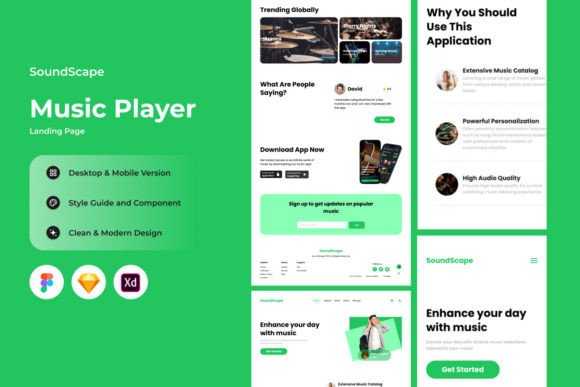
SoundScape: Designing the Ultimate Music Player Landing Page
In the crowded digital marketplace, capturing attention is the first battle, but holding it requires something more profound than just a flashy graphic. For anyone involved in web design, marketing, or content creation, the challenge is always the same: how do you convey a sensory experience—like music—through a static screen? This is exactly the problem that the SoundScape - Music Player Landing Page was designed to solve. It isn't just a collection of screens; it is a carefully constructed brand identity toolkit that translates the emotion of sound into visual architecture.
The Anatomy of an Immersive Interface
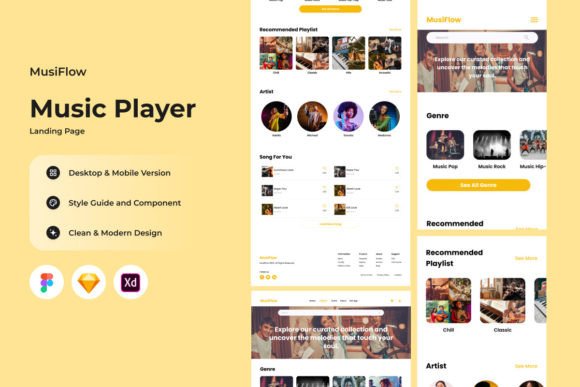
When you first open the SoundScape files, the immediate impression is one of fluidity and depth. The design assets move away from the rigid, boxy layouts often seen in generic tech templates. Instead, the visual style embraces a "glassmorphism" aesthetic mixed with deep, moody gradients that evoke the feeling of standing in a dark concert hall or a quiet studio at midnight. The personality of this project is sleek, modern, and slightly mysterious. It uses negative space intelligently, allowing the user’s eye to flow naturally from the hero section down to the feature lists without feeling overwhelmed.
A crucial aspect of any premium font or design kit is how well it is organized, and this is where SoundScape truly shines for professionals. The layers are not just "organized"; they are intuitive. Whether you are working in Figma, Sketch, or Adobe XD, the file structure respects the designer's workflow. For a busy entrepreneur or a small business owner trying to launch a podcast or a music app, this translates to saved hours. You aren't hunting for that one button in a sea of locked layers; everything is labeled, grouped, and ready for customization.
Visual Hierarchy and the Art of Sonic Branding
One of the most effective ways SoundScape influences your project is through its strict adherence to visual hierarchy. In editorial design and web design, hierarchy guides the user's journey. SoundScape achieves this by pairing bold, modern sans serif font headers with clean, highly legible body text. This contrast creates a rhythm on the page that mimics the rise and fall of a melody.
Consider the psychology of color and type here. The template utilizes global text and color styles, which means you can shift the entire mood of the landing page with a single click. If you are a marketer promoting a high-energy EDM festival, you might shift the palette to neon neons and stark whites. If you are a blogger reviewing ambient soundscapes, you can soften the contrast and use warmer, earthier tones. The underlying typeface choices provided in the kit are versatile enough to handle both scenarios without losing the core "SoundScape" identity.
Furthermore, the inclusion of open source fonts is a massive practical advantage. It removes the headache of licensing issues for the final product, allowing you to deploy the design immediately without worrying about commercial restrictions. This is a detail that seasoned content creators and developers appreciate deeply.
Practical Application: From Prototype to Production
How do you actually use this in the real world? The versatility of the SoundScape - Music Player Landing Page extends far beyond just selling an MP3 player. Its clean layout makes it an ideal candidate for a variety of applications.
- Music Production Portfolios: If you are a composer or producer, you can adapt the "Player" section into a tracklist showcase. The visual style naturally lends credibility to your audio work.
- App Launch Pages: The mobile version is particularly strong. In an era where mobile traffic dominates, having a responsive design that feels native to the device is non-negotiable. SoundScape handles this transition gracefully.
- Podcast Promotion: For publishers and bloggers, the landing page structure works perfectly for a "Coming Soon" page for a new podcast series, using the waveform visuals to suggest content depth.
For graphic designers, this file serves as an excellent educational tool. By deconstructing the file, you can see how modern typography is handled in high-end UI kits. Pay attention to the line heights, the letter spacing, and how the font weights are used to create emphasis without clutter. It is a masterclass in modern typography application.
Evaluating Fit and Customization
When deciding if SoundScape is the right fit for your project, look past the music-specific iconography and focus on the layout structure. Does your content need a strong visual anchor? Do you need to convey a sense of premium quality and immersion? If you are working on a project that requires a creative font pairing and a dark-mode aesthetic—such as a high-end tech gadget review or a luxury lifestyle brand—this template provides a solid foundation.
Customization is straightforward because the design relies on design assets that are easy to swap. The placeholders for images are clearly defined. However, remember that the images used in the preview are for demonstration only; the real magic happens when you inject your own high-quality photography or illustration. The layers are well organized, meaning swapping a background image or changing a button shape takes seconds, not minutes.
Final Thoughts on Workflow and Value
In my experience as a designer, the hardest part of a project is often the "blank canvas" phase. SoundScape eliminates that friction. It provides a sophisticated starting point that feels professional and current. By utilizing the global text and color styles, you maintain consistency across your brand identity, ensuring that your desktop and mobile experiences feel unified.
Whether you are a hobbyist building a site for your band or a brand strategist developing a launch campaign for a new audio technology, SoundScape offers the tools to bridge the gap between the audible and the visible. It is a functional, aesthetically pleasing, and technically sound solution for anyone looking to make a visual impact in the audio space.